Stone mason in White Bear Lake, MN
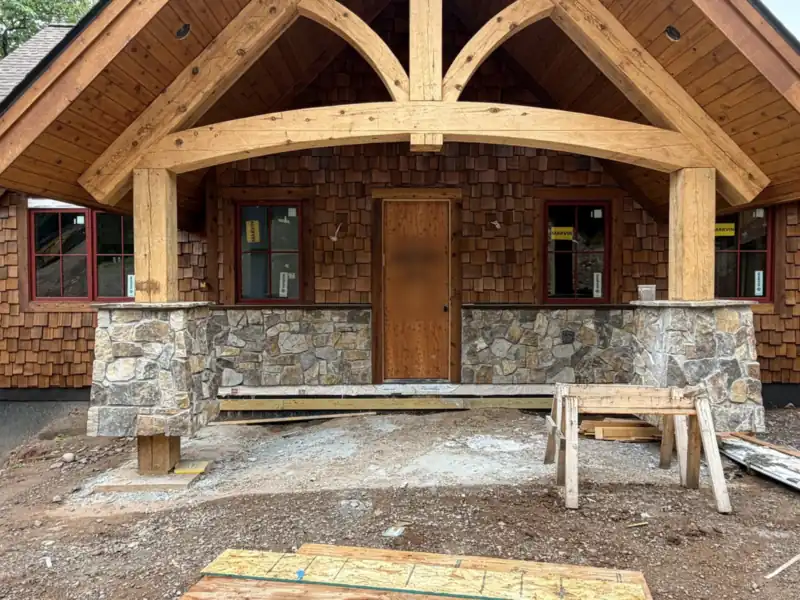
Don Barger runs Stonecrete Inc out of White Bear Lake, Minnesota, and stone is his main work. That means setting natural and cut stone on and around a house: on a front, along a wall, around an entry or a fireplace, and in steps and landings. To talk about a stone job, call or text Don at (612) 432-9467.
- Main work
- Setting natural and cut stone
- Owner
- Don Barger
- Based in
- White Bear Lake, Minnesota
- Call or text
- (612) 432-9467
Places stone goes on and around a house
Stone work is any job where a mason sets stone and beds it in mortar. Around White Bear Lake it usually lands in one of these spots.
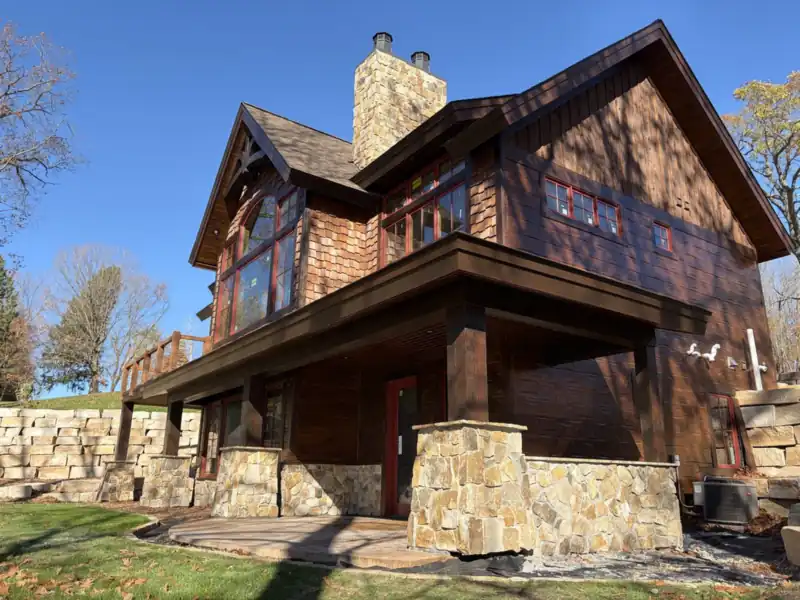
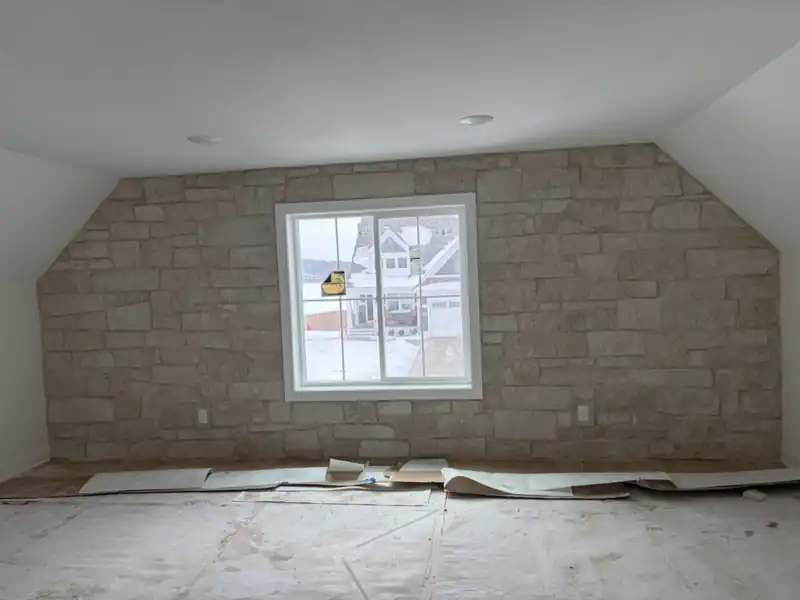
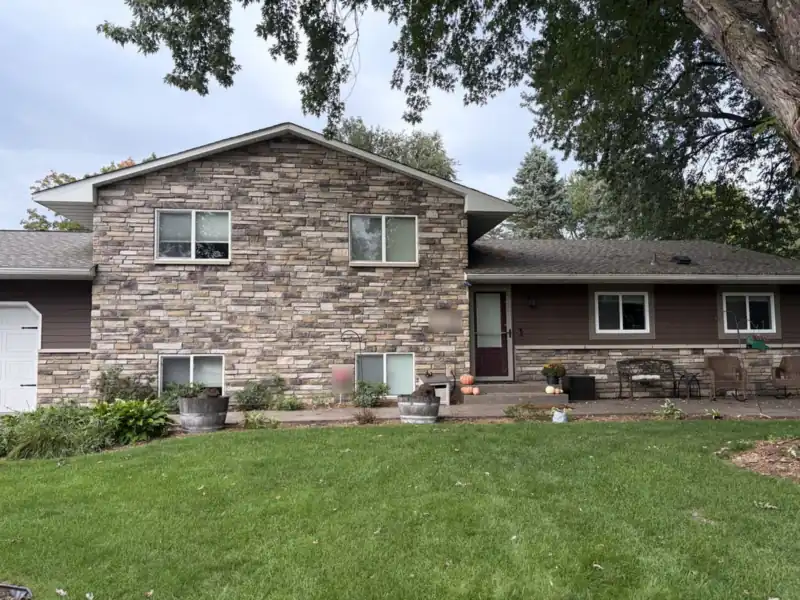
- The front of the house, or a wainscot of stone across the lower part of the walls
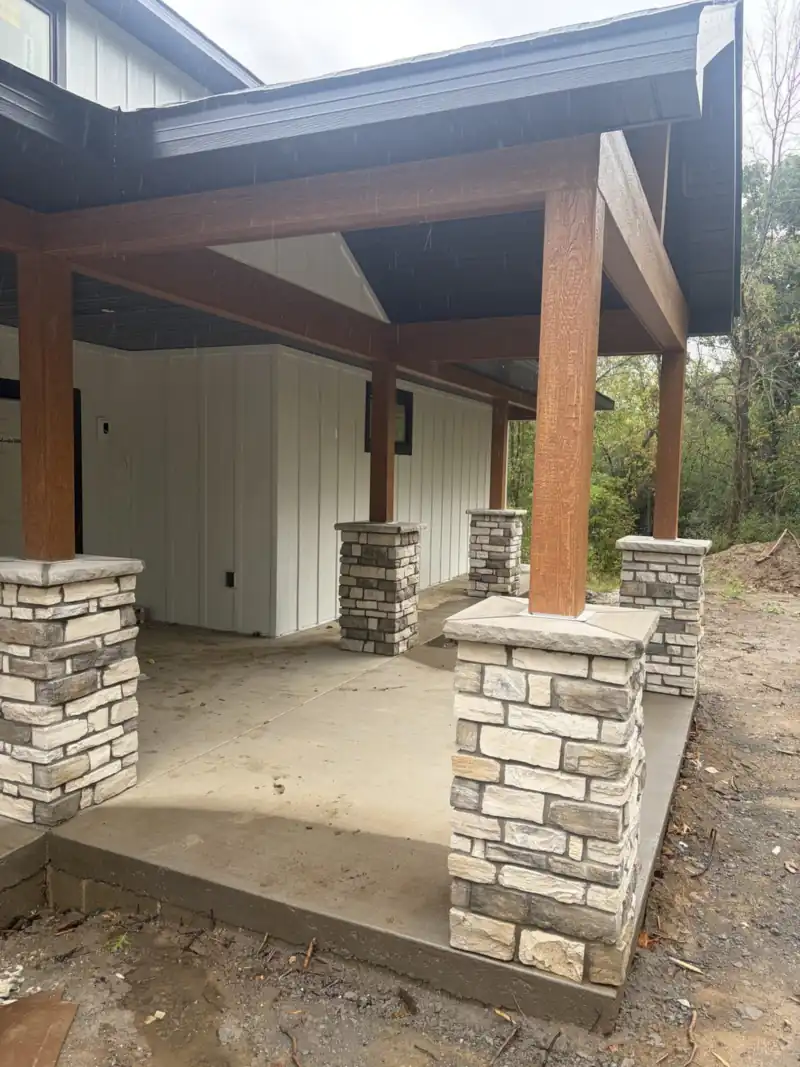
- The entry, where stone frames the door or wraps the porch columns
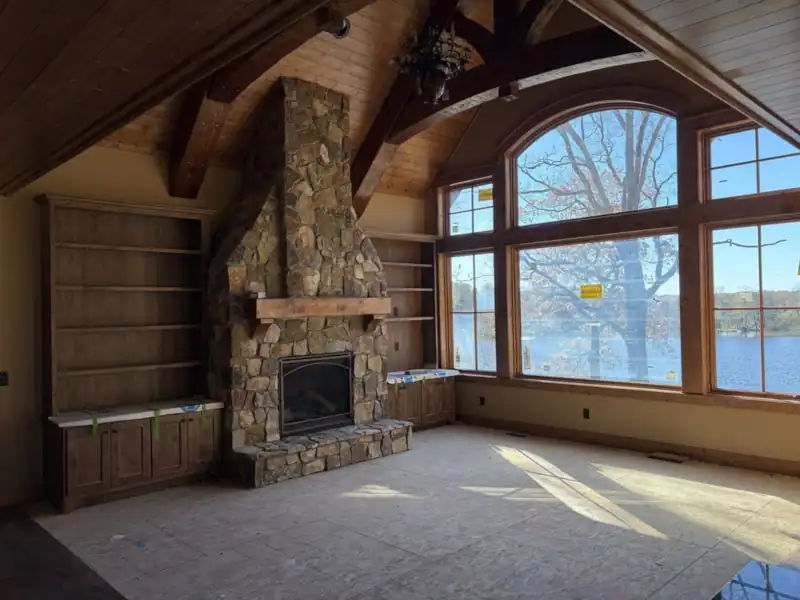
- A fireplace face inside the house
- Freestanding stone walls, garden walls and low walls along a walk
- Steps and landings up to a door
Natural stone and cut stone
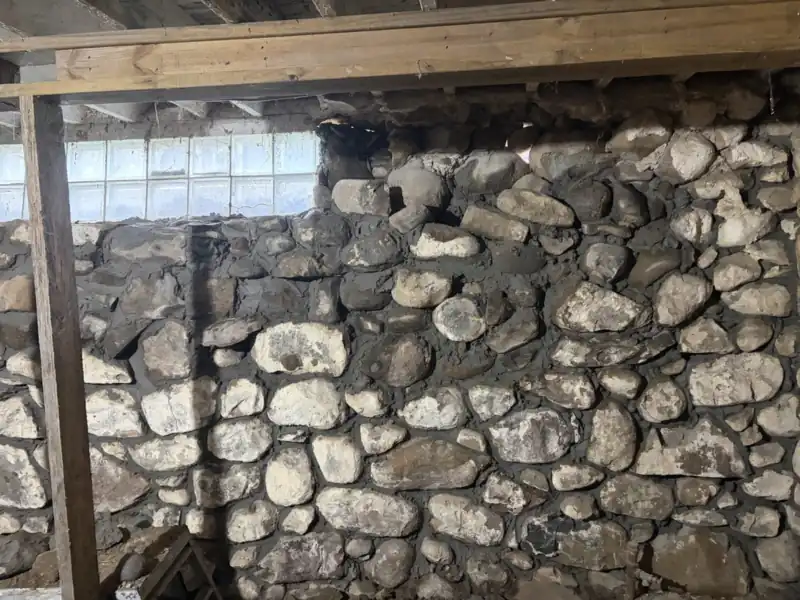
Natural stone comes out of the ground in rough shapes. Fieldstone is the rounded stone farmers once pulled out of their fields, and plenty of older Minnesota houses sit on it. Limestone was quarried around Saint Paul and went into foundations, walls and buildings all over the old city.
Cut stone has been sawn or split to a shape, so it lays up in straighter courses and gives a more even wall. Rough stone gives a looser look, where every piece is fitted to the ones around it.
Which one suits a job depends on the house, the stone already on it and the look you are after. That is a good thing to talk through with Don once he has seen the place.
Stone that holds weight and stone that covers a wall
Some stone carries load. A solid stone wall or an old stone foundation is the structure itself. Other stone is a veneer, a layer set against a wall behind it, and that wall does the holding up.
The difference changes how the work is done. A veneer has to be attached securely to the wall it covers, and it needs a way for any water that gets behind it to drain out. A solid wall needs a sound base under it and joints packed full, so water has nowhere to sit.
If you are not sure which kind is on your house, a photo of the stone and one of where it meets the ground tell Don a lot.
Setting stone for a Minnesota winter
Stone set in White Bear Lake has to live through deep frost, snow piled against it for months and salt splashed on it from the driveway. That shapes how it goes in.
Steps and walls need a base that will not heave with the frost. The top of a wall should shed water instead of holding it. Joints need to be full, with no hollow spots where water can pool and freeze. And the mortar should suit the stone, since mortar much harder than the stone around it can make the stone crack where the joint should have.
Summer storms send a lot of water off roofs and down slopes. Where a stone front or wall sits in the path of it, that water has to be sent somewhere else before it reaches the joints.
Adding to stone that is already there
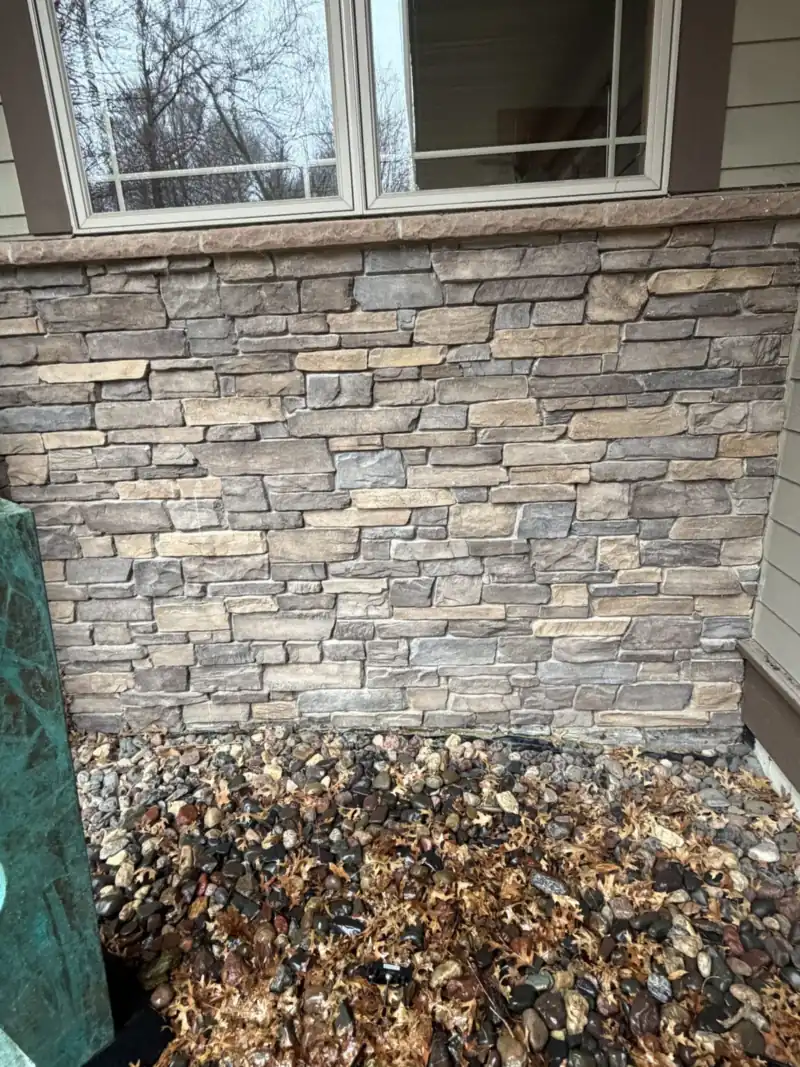
A lot of stone work is adding to what a house already has. A new wall beside an old one, steps that meet a stone front, a section put back where some came down. The aim is for the new stone to sit with the old without standing out.
That means looking at the color, size and shape of the old stone, how the courses run, and the color and finish of the mortar joints. With old stone, a perfect match cannot always be had. Don can tell you how close it can get before any work starts.
Lake lots and sloped yards
Plenty of lots around White Bear Lake slope down toward the water, and the ground on them stays wet through the spring thaw. Stone steps on a slope, and walls along it, have wet soil behind them that freezes and pushes.
A low garden wall in a flat yard is one thing. A wall holding back a hill is a retaining wall, and that is its own kind of job. Tall walls may need a permit or an engineer, so ask your city. Ask Don whether it is a job he takes.
How a stone job gets started
Text Don a few photos at (612) 432-9467. Show the spot from far enough back to see the house around it, then add a close photo or two. For new work, a photo of the space and a rough idea of what you have in mind is plenty to start with.
From there Don takes a look and tells you plainly what the job involves. He works out of White Bear Lake and goes about half an hour in any direction.
Questions
What is the difference between a stone mason and a bricklayer?
Both set masonry in mortar. Brick comes in even sizes, so it lays up in straight courses. Stone comes in every shape, and a stone mason fits each piece to the ones around it. At Stonecrete Inc, stone is Don Barger's main work.
Can stone go on the front of a house that has none?
Often it can, as a veneer set against the existing wall, depending on the wall and what sits under it. The stone has to be attached securely, with a path for water to get out from behind it. Send Don a picture of the wall and ask what it would take.
What kind of stone does Don use?
That depends on the job and on what is already on the house. Ask Don what he would suggest for yours. If you are trying to match old stone, send a close photo of it.
Do I need a permit for stone work?
Some jobs need one and some do not, and the rules change from one city to the next. Ask your city before the work starts.
Does Don work outside White Bear Lake?
Yes, within about 30 minutes of it, in his own words. Further out than that, call and ask.
Don tells you plainly what the masonry needs, and what it does not, before any work starts.