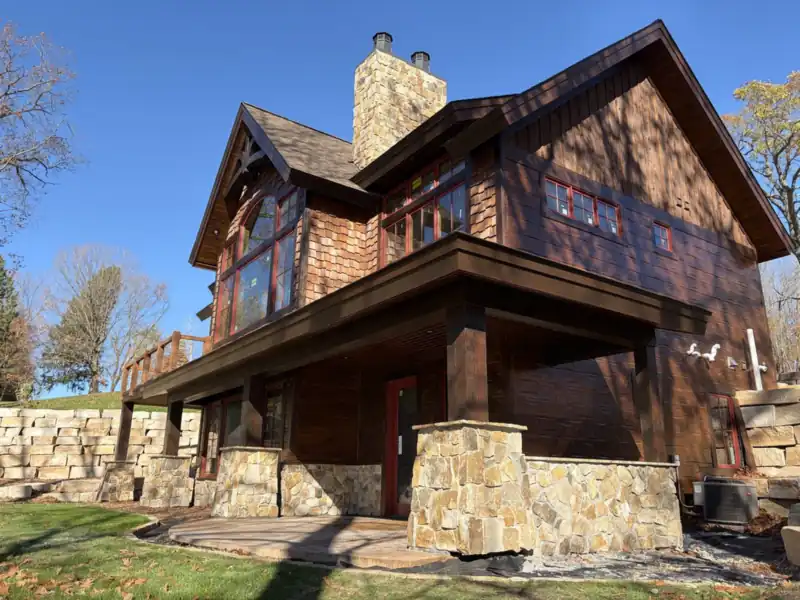
What Minnesota winters do to stone, brick and mortar, and what to look for each spring
Most of the damage to masonry around White Bear Lake and the rest of Minnesota starts with water, and the cold finishes it. Rain and snowmelt soak into mortar joints and into the stone. The water freezes, takes up more room as ice, and pushes the joint open a little. Then it thaws, more water gets in, and it freezes again. Frost in the ground does the same to steps, walks and walls.
- Topic
- Frost, ice and freeze damage
- Where
- White Bear Lake, Minnesota
- From
- Stonecrete Inc, Don Barger
- Call or text
- (612) 432-9467
Water gets in first
Stone, brick and mortar all hold some water. Even hard granite fieldstone takes a little in at its surface, and soft limestone and old lime mortar take in a lot. That part is normal. Masonry gets wet in every rain and dries out again, and a wall can do that for a very long time without trouble.
The trouble starts where water gets in and cannot get back out before it freezes. A hairline crack between a stone and its mortar. A joint that has worn back from the face and holds a little ledge of water. The flat top of a wall or a step where melting snow sits. Those are the spots that break down first.
Water takes up more room as ice than it did as water. When it freezes inside a crack or a soft joint, it pushes. One freeze does very little. But the crack it opened holds a bit more water next time, so the next freeze pushes a bit harder, and the joint loosens a little more each round.
Why fall and spring do more harm than January
Steady cold in the middle of winter is fairly easy on masonry. Once a wall is frozen through and stays frozen, not much changes in it until it thaws.
The damage piles up in the swings. In late fall, and again in March and April, the sun melts snow on a south wall in the afternoon and the water runs into the joints. That night it freezes. The next day it thaws again. A wall can go through that more times in one spring than anyone would bother to count.
So the sunny side of a house often looks worse than the shady side, even though the shady side stays wet longer. And snow plowed or shoveled into a pile against a stone wall or a foundation sits there all winter, then melts slowly into the base of the wall right when the freeze and thaw swings are at their worst.
Frost in the ground lifts steps and walls
The ground freezes deep here, and wet ground swells as it freezes. Anything sitting in that ground goes up with it. Stone steps, landings, walks, stoops and short garden walls are the usual ones, because they often sit on shallow footings or on nothing more than packed gravel and dirt.
Frost rarely lifts evenly. One side of a step stays drier and lifts less. The other side sits in wet ground and lifts more. So the step tips, the joints on one side crack open, and a gap opens where the top step meets the house. In spring the ground thaws and the step settles back, but almost never all the way and almost never to the same spot.
Each winter adds a little to the last. A landing that was level when the house was new can lean toward the house after enough winters, and then it sends rain and meltwater at the foundation instead of away from it.
Footings set below where the ground freezes are not lifted the same way. How deep that has to be for a new step or wall is a building code question, so ask your city what applies before anything new goes in.
Where it shows up on houses around White Bear Lake
What the frost does depends a lot on what the house is made of and when it went up.
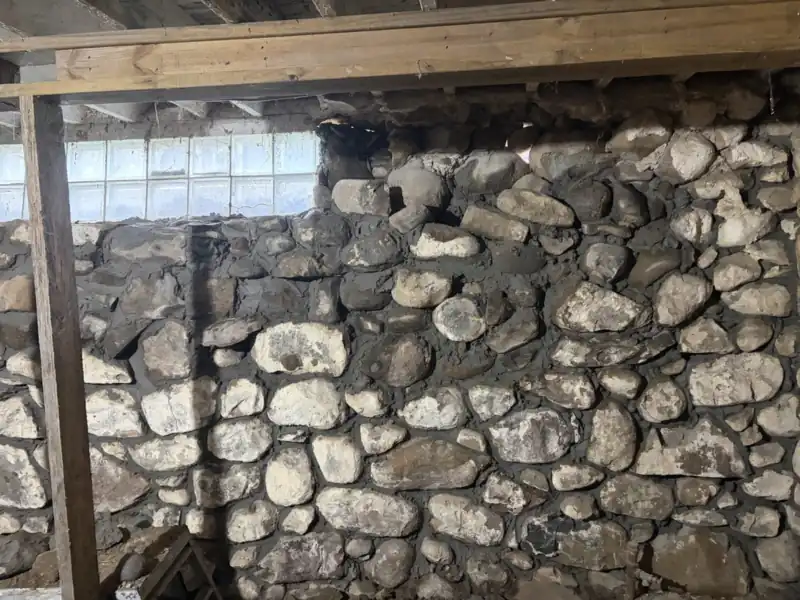
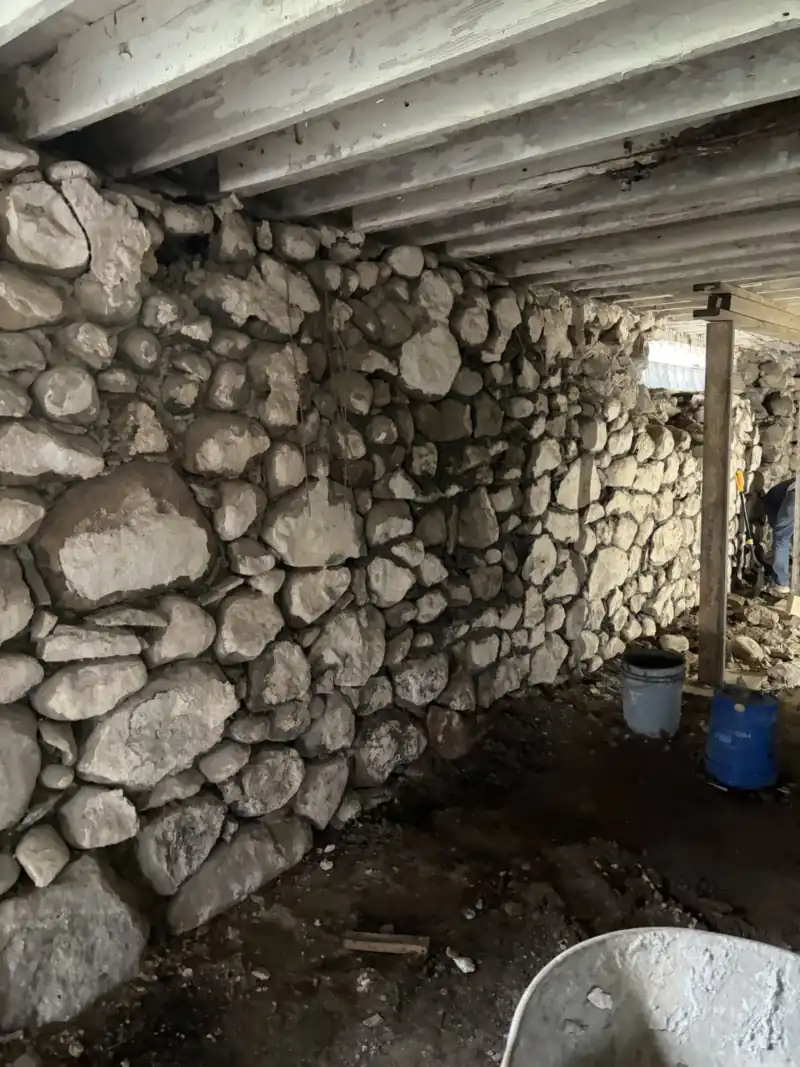
- Older lake cottages, old houses near downtown, and the older neighborhoods of Saint Paul and Stillwater: limestone and fieldstone foundations in soft lime mortar. The joints go sandy and wash out, and stones work loose low on the wall where the snow piles up.
- Mid century ramblers and split levels: block foundations with stone or brick on the front. Look under window sills and along the bottom course, where water runs down the face and sits.
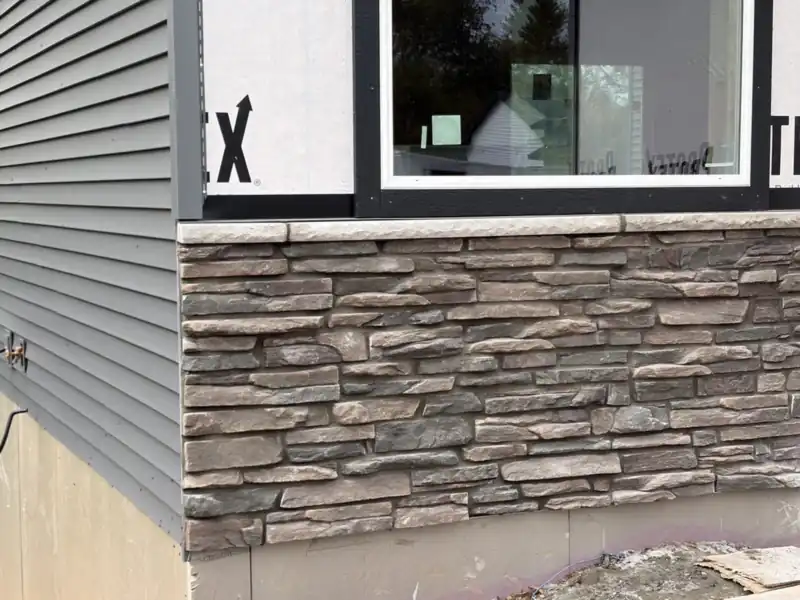
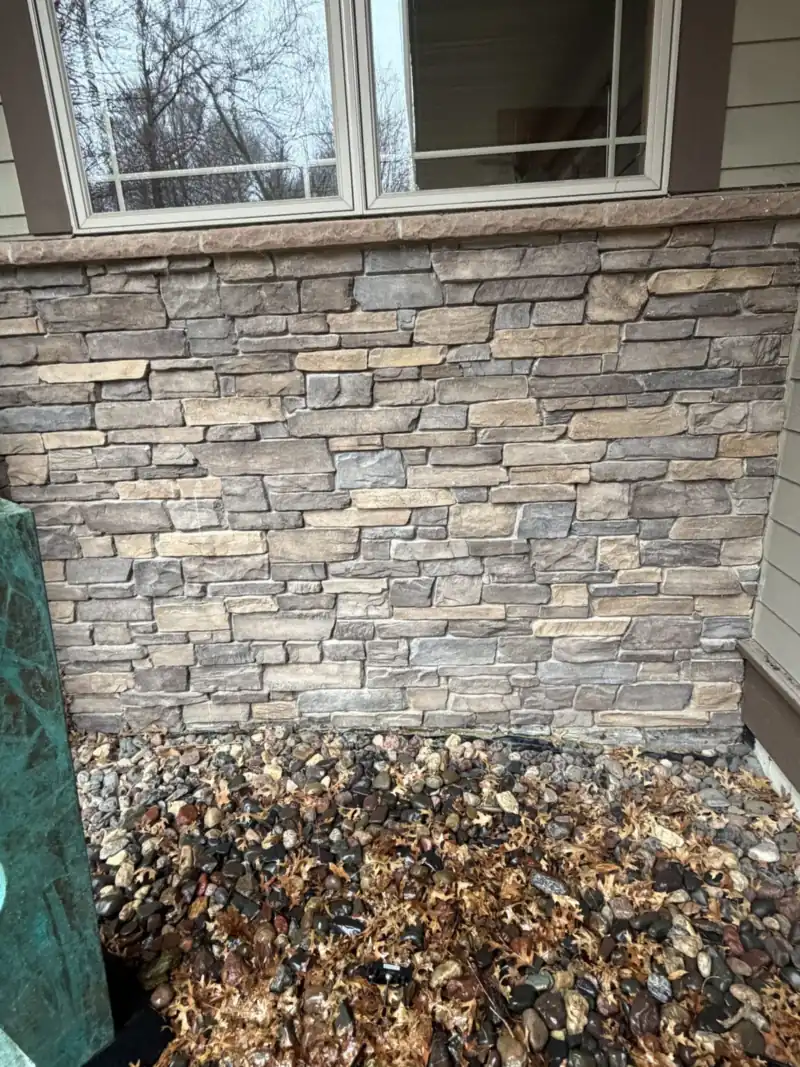
- Newer houses in Hugo, Lino Lakes and Woodbury: thin stone veneer on the front. Water that gets behind it at the bottom edge, around windows or where it meets the siding can freeze there and push stones off.
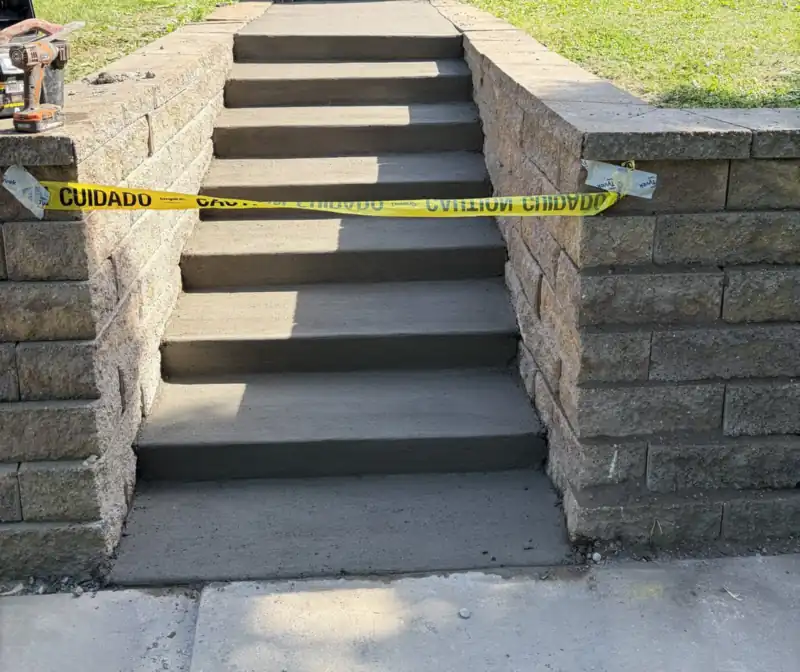
- Stone steps and landings on any house: heave, open joints on the treads, and loose stones at the front edge.
- Wall caps and the flat tops of stone walls: water sits on them, so their joints are usually the first to open.
Signs to look for each spring
The best time to look is after the snow is gone and before the plants leaf out. Frost damage usually shows up as one or more of these.
- Mortar that is sandy and scratches out with a key or a screwdriver
- Hairline cracks running along the edge of a stone, between the stone and the mortar
- Stones that rock when you push on them, or sit out of line with the ones around them
- Thin flakes or chips coming off the face of the stone, mostly low on the wall and on steps
- White powder or crust on the face, which means water is moving through the wall
- Steps that tip, or a gap that has opened between the top step and the house
- Cracks you marked last year that are now longer or wider
What can wait and what should not
A few sandy joints high on a sheltered wall can usually wait a season if you keep an eye on them. Joints that are open on the top of a wall, on a cap, on a step or anywhere water lands directly should not sit through another winter. Each freeze takes a little more, and a joint that is open this fall can be a loose stone by spring.
Loose stone over a door, a walk or a step is a safety matter, so do not leave it. And a wall that keeps moving, a crack that keeps growing or a foundation wall that bulges in is past what new mortar can fix. Some jobs need a structural engineer to look first, and the masonry work follows what they find.
The spring masonry check guide on this site walks around a house in order, from the front steps to the chimney top to the walls holding back the yard, and says what each of these signs means.
Keeping extra water off the masonry
Less water on the stone means less for the frost to work with. Most of this costs little or nothing.
- Keep gutters clear and downspouts carrying water away from stone walls, steps and the foundation
- Do not pile shoveled or plowed snow against stone walls or the foundation
- Keep the ground sloping away from the house so meltwater runs off and does not sit at the wall
- Aim lawn sprinklers away from stone and mortar
- Ask before putting any coating or sealer on stone, since some trap water inside and the face flakes off when it freezes
- Get open joints closed up before they let stones work loose
Getting frost damage fixed
Stone that has moved and joints that frost has opened are stone repair, the work Don Barger does at Stonecrete Inc in White Bear Lake. The stone repair page on this site explains how he resets loose stone, repoints worn joints and finds the reason the stone failed in the first place.
Don covers White Bear Lake and the surrounding area. Call or text him at (612) 432-9467 and send a wide photo of the wall or steps, a close photo of the worst spot and the name of your town. If the damage is on brick, a chimney or concrete, ask Don about it.
Questions
Why does the mortar wear out before the stone does?
It is supposed to. Mortar is meant to be the softer part of the wall, so it takes the wear and gets replaced now and then while the stone stays. When the mortar is harder than the stone around it, the stone starts to crack and flake instead, and stone is much harder to replace.
My front steps lifted this winter and dropped back in spring. Is that a problem?
That is frost heave. Some movement on shallow steps is common here, but each round tends to leave the steps a little more out of level and the joints a little more open. If a step now tips toward the house, rocks underfoot or has pulled away from the house, have it looked at before next winter.
What time of year does stone repair get done here?
Mortar has to set and cure without freezing, so repointing and resetting stone is warm weather work. Spring is when most people find the winter damage, which makes it a good time to send Don photos and ask how his season looks.
Does a crack in a stone wall mean the wall is failing?
Not always. A hairline crack along a mortar joint is often just the joint wearing. A crack that runs through the stones, or one that gets longer each spring, means something is moving. Mark the ends with a pencil and take a photo. If it grows, have it looked at, and a wall that keeps moving may need a structural engineer first.
Don tells you plainly what the masonry needs, and what it does not, before any work starts.