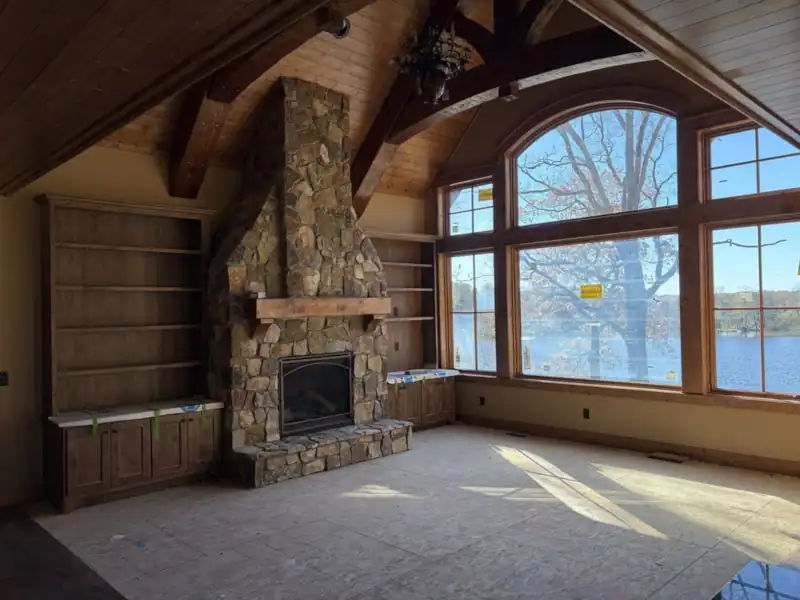
Block retaining walls around White Bear Lake
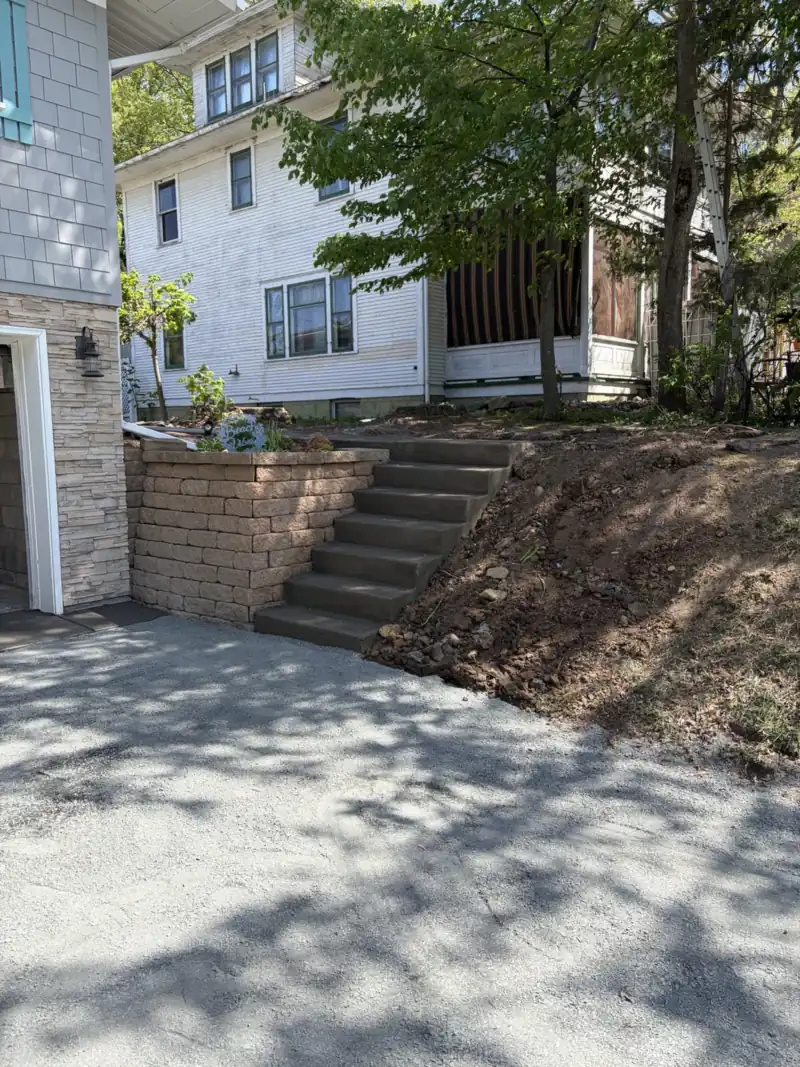
Stonecrete Inc builds block retaining walls around White Bear Lake, Minnesota. In Don Barger's own job photos, a new set of front steps has a capped block wall on each side holding the lawn back above the sidewalk, and another block wall runs beside steps that climb a slope. Don covers White Bear Lake and about 30 minutes around it. Call or text (612) 432-9467.
- Walls
- Block retaining walls
- In Don's photos
- Block walls beside new steps
- Based in
- White Bear Lake, Minnesota
- Call or text
- (612) 432-9467
Walls on each side of the front steps
A lot of front yards around here sit higher than the city sidewalk. Run a set of steps up through that rise and the ground on each side has to be held back. Otherwise the dirt slumps onto the steps and the sidewalk, and every hard rain washes a little more of it down.
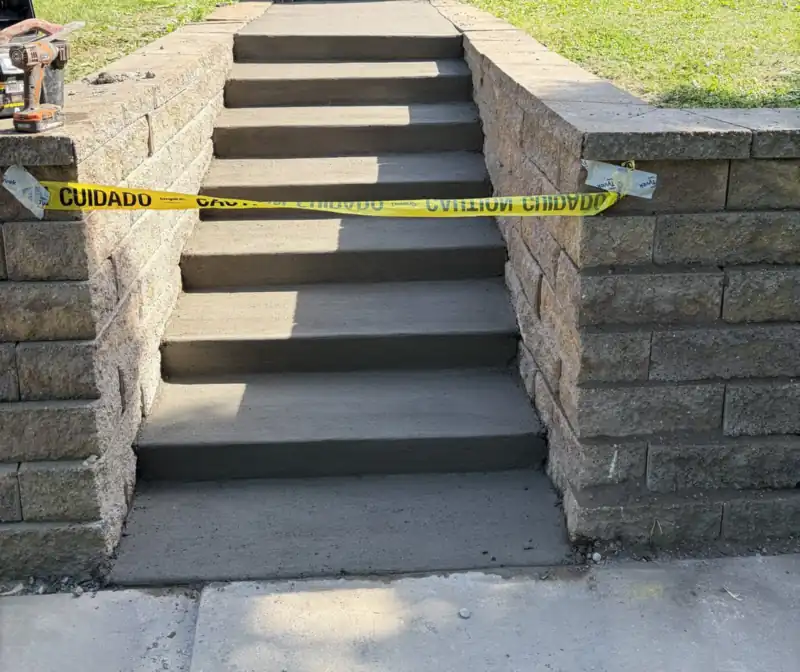
That is what Don's photos show. A new set of concrete front steps has a capped block wall on each side, and the caution tape is still up. In another photo, concrete steps climb a slope beside a new block wall.
What a block wall needs under it and behind it
Block walls are common in the newer neighborhoods, from Hugo and Lino Lakes down to Woodbury. From the street they all look about the same, rows of block with a cap on top. What keeps one standing is the part nobody sees, under the bottom row and behind the block. The dirt back there stays wet through the spring thaw and freezes hard in winter, and the wall has to hold through both.
A block wall that holds up here usually has all of these:
- A base dug out and packed down hard, so the first row sits level and does not settle
- The bottom row set down into the ground instead of sitting on top of the lawn
- Gravel behind the block, so water runs down through it instead of sitting in the dirt against the wall
- A way for that water to get out at the bottom, often a drain pipe
Why walls lean
Dirt is heavy, and wet dirt is a lot heavier. Rain and snowmelt soak the ground behind a wall, and when that water has nowhere to go it presses on the back of the block. In winter the same wet ground freezes and swells, and the wall takes another push. Then the thaw softens the ground under the base, and the wall settles wherever it got shoved.
A wall that leans was usually missing something on that list. A downspout emptying behind the wall, or a driveway that drains toward it, sends extra water to the back of the block every time it rains.
Old timber walls give out a different way. Some older yards here still have walls of landscape timbers or railroad ties, and wood sitting in wet ground rots from the back side first. One spring the wall starts to sag. If yours is going and you want block in its place, ask Don about it.
When the wall you have is leaning
A wall that is already leaning is a different job from a new one. If yours leans out at the top or has a block pushing out of the face, send Don a photo and ask whether it is a job he takes.
Stand at one end and take a picture looking down the length of the wall. A lean shows up better from there than from the front. A wall that holds up a driveway or the corner of a garage is a bigger deal, and so is one that keeps moving year after year. Some jobs need a structural engineer to look first.
Permits and buried lines
Whether a retaining wall needs a permit depends on the wall and on your city. Ask your city before anything is planned. If the wall will sit close to the sidewalk, ask where your lot line is too. It is not always right at the edge of the sidewalk.
Before anyone digs, the buried lines have to be marked. In Minnesota that goes through Gopher State One Call at 811, and the utilities come out and mark their own lines. But lines you own, like a sprinkler line or a wire out to a garage, are not part of that, so tell Don where they run.
Questions
Why is my retaining wall leaning?
Most of the time it is water. Wet dirt behind a wall is heavy, and in winter it freezes and swells. With no gravel behind it and no way for water to get out, the wall gets pushed every year until it tips.
Does Don take on walls that are already leaning?
Send him a photo and ask whether it is a job he takes. Say if the wall holds up a driveway or has kept moving, because some jobs need a structural engineer to look first.
Can Don do the steps and the wall together?
Don's photos show the two side by side, with new concrete front steps poured between two new block walls. If your job is steps and a wall, say so when you text him.
Do I need a permit for a retaining wall?
It depends on your city and on the wall. Call the city before the wall is planned and ask what they need from you.
Does Stonecrete build natural stone or boulder walls?
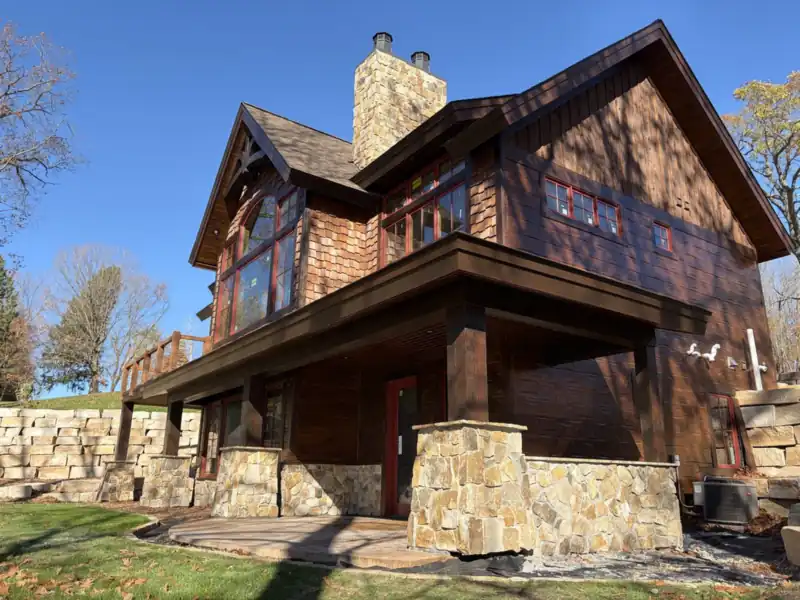
The walls in Don's photos are block. For a natural stone or boulder wall holding back a slope, send him a photo and ask whether it is a job he takes.
What should I send Don about my yard?
A photo from far enough back to see the house and the walk or driveway below it, one from the side so the slope shows, a note on where water runs when it rains, and your town.
Don tells you plainly what the masonry needs, and what it does not, before any work starts.