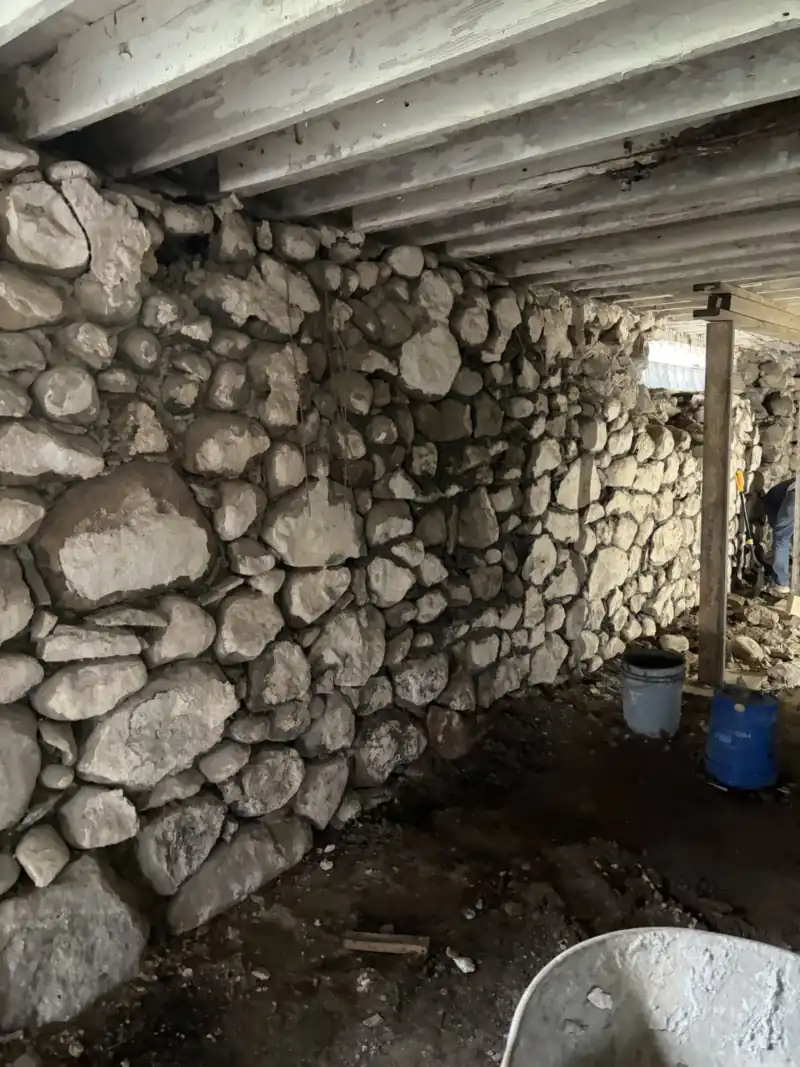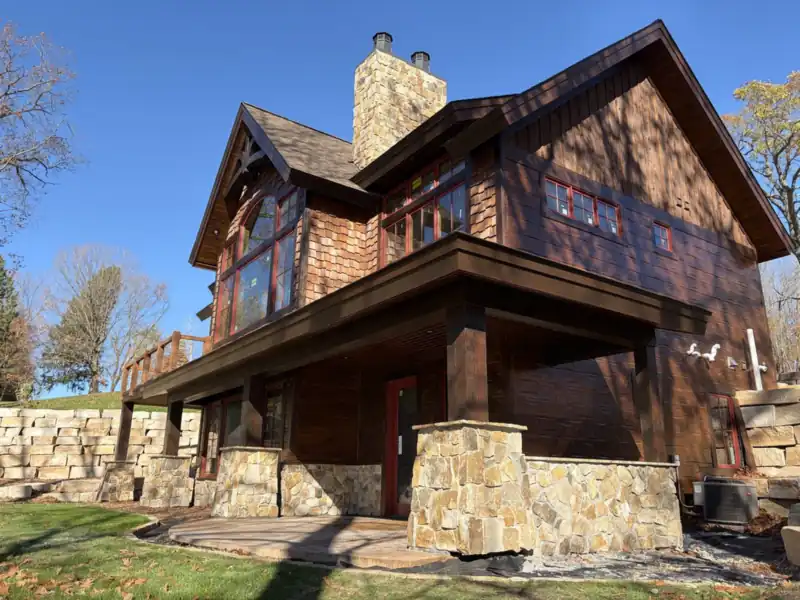
Old limestone and fieldstone foundations under the older houses of Saint Paul, White Bear Lake and Stillwater
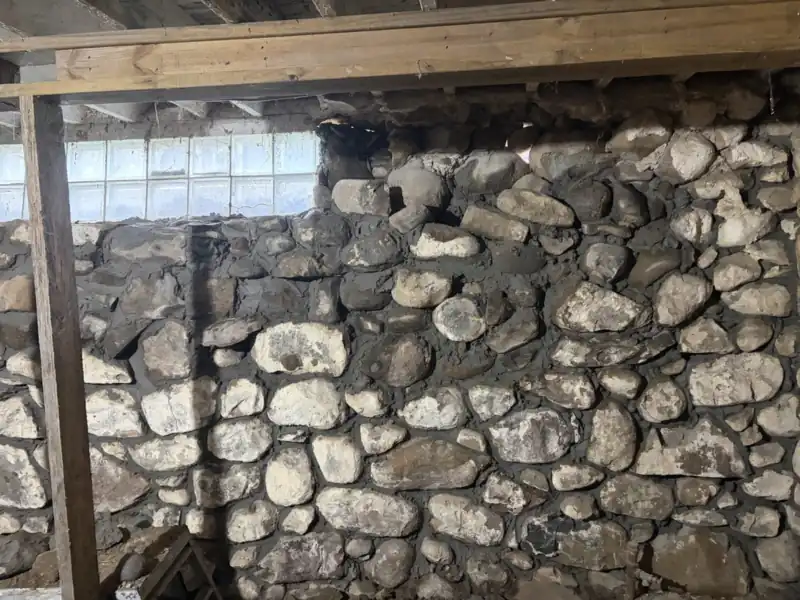
Many older houses around Saint Paul, White Bear Lake and Stillwater sit on foundations of local limestone or rough fieldstone laid in soft lime mortar. Those walls were built to take on a little damp and let it dry back out through the joints. Trouble usually starts when the old mortar washes out, or when someone patches it with hard cement mortar that traps water and makes the stone crack and flake.
- Topic
- Old stone foundations
- Found under
- Older houses in Saint Paul, White Bear Lake and Stillwater
- From
- Stonecrete Inc, Don Barger
- Call or text
- (612) 432-9467
What is under an old house here
Limestone was quarried around Saint Paul and used all over the old city, in foundations, walls and whole buildings. Houses on the East Side and around downtown, the old houses on the hills in Stillwater, and the lake cottages near White Bear Lake often stand on it. Some foundations are cut limestone laid in rough courses. Others are fieldstone, the rounded granite and mixed stone the glaciers left scattered across the fields here, fitted together with wide joints.
Many of these walls are thick, with stone on both faces and smaller stone and mortar filling the middle. They were laid in lime mortar, a mix of lime and sand that is softer than the stone. That softness was on purpose.
Why the old builders used soft mortar
Lime mortar lets damp pass through it. In an old foundation, water from the ground works into the wall, and the wall dries out again through the mortar joints. The stone stays fairly sound because the water leaves by way of the joints and not through the stone.
Lime mortar also gives a little. Old houses settle and shift with the seasons, and a soft joint can take small movement without the stone cracking. When something has to give, the mortar gives, and mortar is the part a mason can rake out and replace.
Over a long life that mortar does wear out. The lime washes away bit by bit and the joint turns to loose sand. That is expected, and repointing with a mortar that suits the stone puts the wall back to working the way it was built to.
Hard cement patches on soft stone
Plenty of old foundations have been patched with modern cement mortar at some point, often by someone doing their best with a bag from the hardware store. Cement mortar is much harder than lime mortar, and usually harder than old limestone too. It also lets far less damp through.
Once joints are sealed with something hard, water in the wall cannot leave through them. It leaves through the stone instead. The face of the stone stays wet, the frost works on it, and it flakes and crumbles right next to a joint that still looks fine. Stones crack along the edge of a hard patch, and sheets of patch let go and fall off, sometimes taking a layer of stone with them.
The same goes for a cement coat smeared over the outside of an old stone wall. It can look tidy for a while, but it holds water behind it, and when it comes off, the stone under it is often worse than before.
Signs that a hard patch is doing harm:
- Gray cement joints sitting next to joints that have gone to sand
- Stone faces flaking or crumbling along the edge of a patch
- Cracks through the stone that follow a patched joint
- Patch that has come away in a sheet, with loose stone behind it
Damp walls and crumbling joints
An old stone basement is rarely bone dry, and some damp is normal. What matters is whether it is getting worse. These are the signs that it is.
- Sand piling up on the floor at the base of the wall
- Joints you can scrape out with a finger
- White crust on the stone, which shows where water is coming through and drying
- Water running in during the spring thaw or after a summer storm
- Stones that have shifted or dropped out of the inside face
- A musty smell that is new or stronger than it used to be
Deal with the water outside first
Before anything happens to the wall itself, look at where the water comes from. Downspouts that empty at the foundation, ground that slopes toward the house, and gardens or mulch built up against the wall all keep the stone wet. Snow shoveled off the walk and piled along the house melts straight into the wall in spring.
Get the roof water and the grading sorted out first, or the new joints will be fighting the same water the old ones lost to.
What repointing an old stone foundation involves
Repointing means taking out the failed mortar and putting new mortar in its place. On an old foundation it is careful, slow work, because the stone is soft and the joints are uneven.
- The loose and sandy mortar is raked or cut out by hand, back to mortar that is sound, without chipping the edges of the stone
- Old cement patches come out where they can be taken out without breaking the stone around them
- The joints are brushed or blown clean and dampened, so the dry stone does not pull the water out of the new mortar too fast
- New mortar with plenty of lime in it, softer than the stone, is packed in firm, in layers where the joint is deep
- The joint is finished to shed water, then kept damp and out of the sun, wind and frost while it cures
- Stones that have moved or fallen out are reset as the work goes
Making the repair look like it belongs
Matching the color and texture of the old joints mostly comes down to the sand. Getting it close keeps a repaired wall from looking patched.
Most of this work is done on the inside face and on the part of the outside you can see above the ground. The outside below the ground is another job. And because mortar cannot freeze while it cures, this is work for the warmer months.
When a structural engineer should look first
Repointing fixes joints. It does not fix a wall that is moving. Some jobs need a structural engineer to look first, and the masonry work then follows what they find. These are the signs to watch for.
- A section of wall that bulges or leans into the basement
- Cracks that run through the stones and get longer from one season to the next
- Several stones falling out of the inside face in one area
- Floors above that have started to sag, or doors upstairs that have newly started to stick
- Any wall that changed after digging, an addition or heavy equipment close to the house
Stone repair for an old foundation
Resetting loose stone and repointing old stone in a mortar that suits it is stone repair, the work Stonecrete Inc owner Don Barger does. The stone repair page on this site covers old limestone foundations and walls, how Don resets stone that has moved and how he repoints joints laid in lime mortar.
If your foundation is block or poured concrete, or the question is bigger than the joints, ask Don about it. Permits for foundation work differ from city to city, so ask your city what applies. Don is based in White Bear Lake and covers the surrounding area. Call or text (612) 432-9467 with a wide photo of the wall, a close photo of the worst joints and the name of your town.
Questions
Is it bad that my old stone basement is a little damp?
Some damp is normal in an old stone foundation, since the wall was built to take on a little water and dry it back out. It is worth a closer look when sand starts piling up at the base, water runs in during the thaw, or stones start to move.
Can I patch the joints myself with mortar mix from the store?
Be careful. Most bagged mortar mixes are cement based and much harder than old lime mortar and soft limestone. A patch that is harder than the stone pushes the damage into the stone. Find out what mortar suits your wall before anyone patches it, yourself included.
Should I paint or seal the inside of an old stone foundation?
Usually not. Coatings that stop the wall from drying out tend to trap water, peel off and push the damp somewhere else in the wall. Ask before you put anything on the stone.
How can I tell if my foundation is limestone or fieldstone?
Limestone is usually gray to tan or yellowish, in flat sided blocks laid in rough courses. Fieldstone is rounder and mixed in color, with wider joints between the stones. Plenty of old walls have some of both. A photo of the inside face is usually enough to tell.
Do I need a permit to repoint my foundation?
It depends on the city and the job. Ask your city before the work starts.
Don tells you plainly what the masonry needs, and what it does not, before any work starts.