Stone repair around White Bear Lake
Stone repair means putting old stone right. Loose and fallen stones get reset, worn joints get repointed, cracked or heaved stone steps and walls get rebuilt where they need it, and old limestone and fieldstone walls get mortar soft enough for them. Don Barger of Stonecrete Inc does this work around White Bear Lake, MN. Call or text (612) 432-9467.
- Repairs
- Loose stone, worn joints, heaved steps
- Older houses
- Limestone and fieldstone in soft mortar
- Based in
- White Bear Lake, Minnesota
- Call or text
- (612) 432-9467
Signs the stone needs work
Stone itself lasts a very long time. What gives out first is usually the mortar between the stones, or the ground under them. Walk around and look for these.
- Mortar gone sandy, or gaps where it has dropped out of the joints
- A stone that rocks when you push it, or one already on the ground
- Steps that tip, have pulled apart, or have one stone sitting higher than the rest
- A bulge, a lean, or a crack running through several courses of a wall
- White stains on the face of the stone, or the face flaking off in thin layers
What wears stone down here
Almost every one of those signs comes back to water. Rain and snowmelt get into an open joint or a crack. In the cold it freezes and swells, and the ice pries at the stone and the mortar around it. In fall and spring that can happen night after night.
Frost heave does the same thing from underneath. Wet ground under a step or a wall freezes and lifts it, and when it thaws the stone does not always settle back where it was. After a few winters the steps pull apart and the joints between them crack.
Road salt makes all of it worse. Salty water soaks deeper into stone and mortar, and when it freezes it breaks down the surface faster. The white crust on steps and along the bottom of walls in spring is salt and minerals coming back out as the stone dries.
Resetting loose and fallen stone
A stone that has come out can usually go back in. The old mortar gets cleaned off the stone and out of the hole it left, back to a sound bed. Then the stone is set in fresh mortar and the joints around it are packed full.
When several stones have come loose in the same area, Don looks for the reason before putting them back. Water getting in at the top of a wall, a downspout emptying against it, or a base that moves each winter will push them out again.
Repointing worn joints
Repointing is cutting the worn mortar out of the joints to a sound depth, cleaning them out, and packing in new mortar. The joint is then finished so it sheds water. On a lot of stone walls this is the whole job, and the stones stay right where they are.
The side of a house or wall that takes the weather usually wears first. Sometimes it makes sense to repoint that side and leave joints that are still sound alone. The repointing guide has more on how it is done.
Old limestone foundations and soft lime mortar
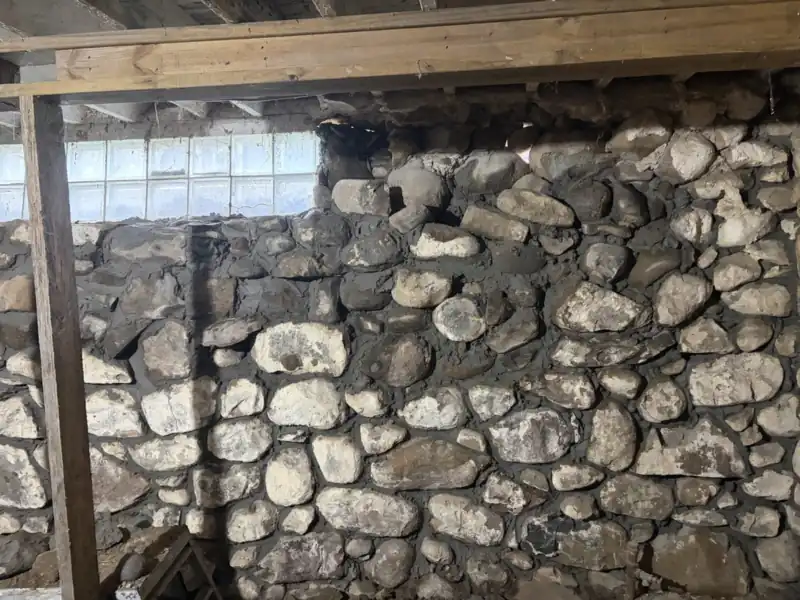
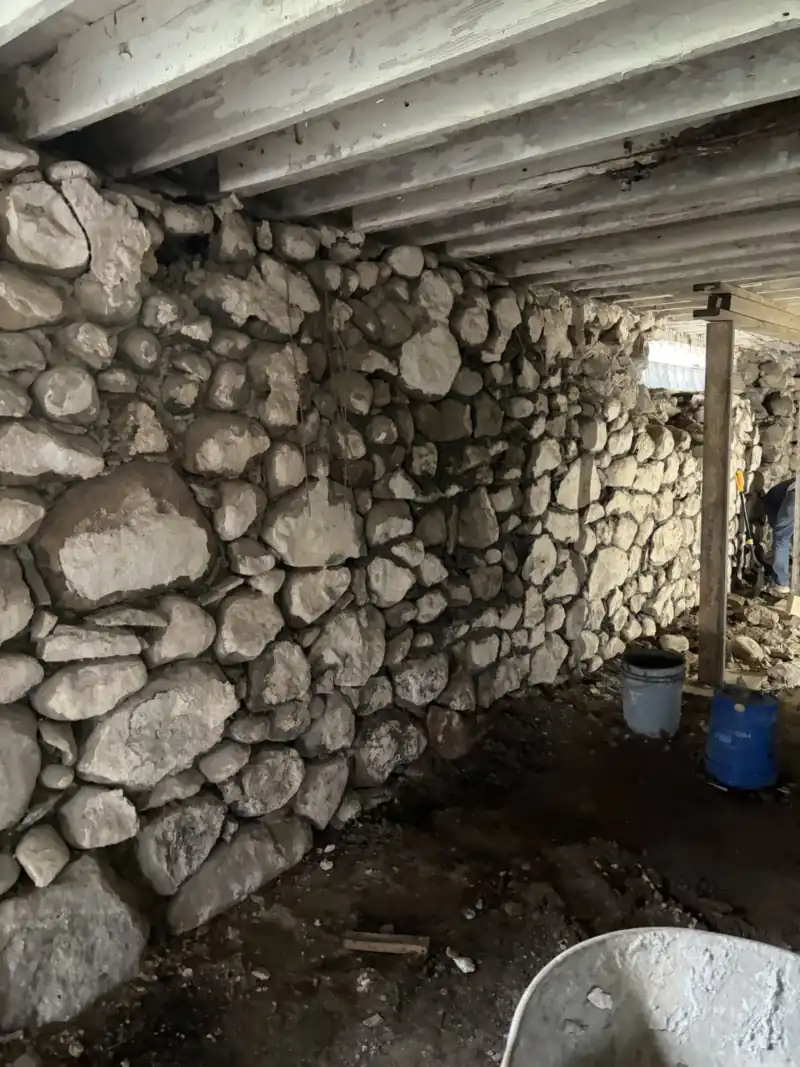
Plenty of older houses near the lakes, in Saint Paul and in Stillwater sit on limestone or fieldstone foundations. The mortar in those walls is lime, and the builders wanted it softer than the stone. Every winter the house shifts a hair with the frost, and the joints take that movement so the stone does not have to. Damp in the wall dries out through the joints as well.
Trouble starts when those joints get patched with a hard cement mortar. Hard mortar does not give, and it holds water in the wall. The stone ends up taking the strain, and soft limestone can crack or crumble at the face. So the repair calls for a mortar soft enough to suit the stone, and hard patches put in since then may need to come out.
If an old foundation wall is bowing in, keeps moving, or has a crack that keeps growing, some jobs need a structural engineer to look first.
Cracked and heaved stone steps
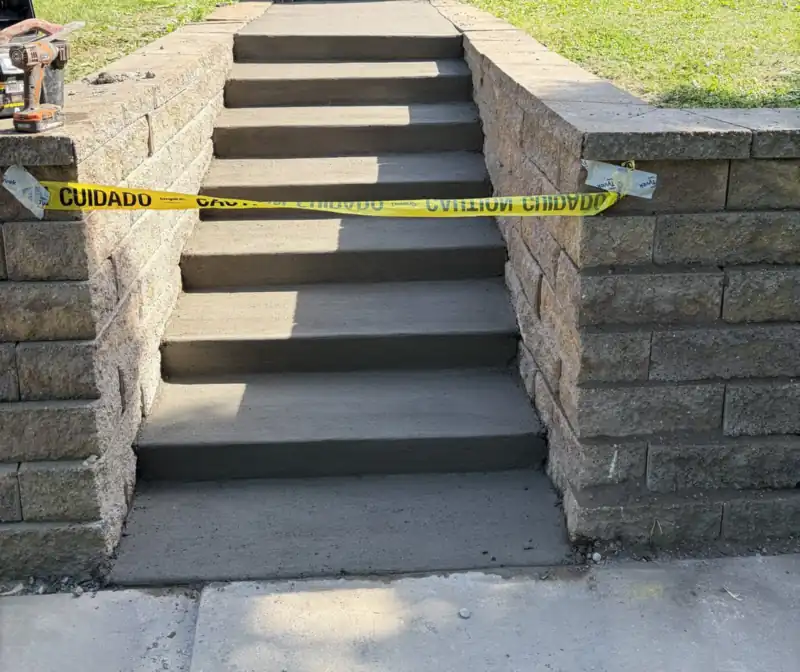
Stone steps by the door take frost, foot traffic and salt all winter. When the ground under them heaves, the treads tip and the joints crack, and water gets in faster after that.
Some steps can be lifted, given a better base and reset with the same stone. Others have a broken tread that needs a new piece cut to fit. Which way it goes comes down to the shape they are in and what is underneath, and Don can tell once he sees them.
Showing Don the damage
Take one photo from far enough back to show the whole wall or set of steps, and a close one of the worst spot. Say roughly when you first noticed it. Text it all to (612) 432-9467.
Don runs Stonecrete Inc from White Bear Lake and covers about 30 minutes around it.
Questions
Can I fill the gaps in my stone wall myself?
You can fill a joint, but the mortar matters. A hard patch on soft stone can do more harm than the gap did. If you want to know what the wall needs, send Don a photo.
Why are there white stains on my stone steps?
Usually it is salt and minerals that came out of the stone as it dried. It shows water and salt are moving through the stone. Brushing it off dry is fine. The bigger question is where the water is getting in.
Can a stone that fell out be put back?
Usually, yes. A stone that has come out can often be cleaned up and set back in fresh mortar. The sooner the hole is dealt with, the less water gets into the wall around it.
Can stone be repaired in winter?
Fresh mortar has to cure without freezing, so a lot of masonry work waits for warmer weather. Ask Don about timing for your job.
Do old stone foundations need a special mortar?
They need a mortar softer than the stone, close to the lime mortar they were built with. Hard cement mortar holds water in soft stone and can crack it.
Don tells you plainly what the masonry needs, and what it does not, before any work starts.